简体中文
简体中文 Deutsch
 日本語
日本語 한국어
한국어 Tiếng Việt
 Русский
 ไทย
ไทย Bahasa Indonesia
 Bahasa Melayu
 Filipino
 لالعربية
 Français
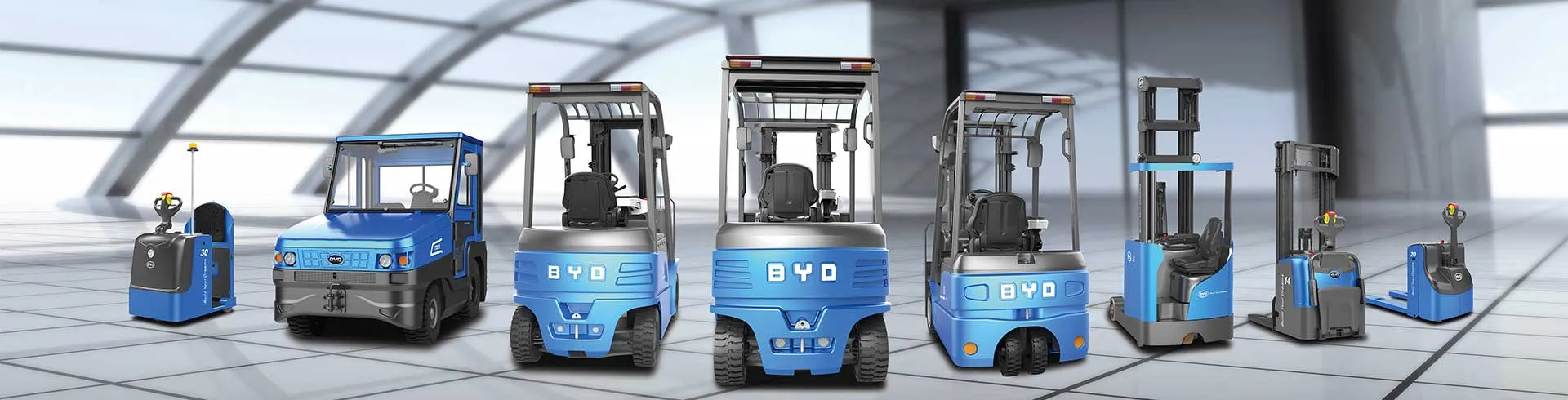
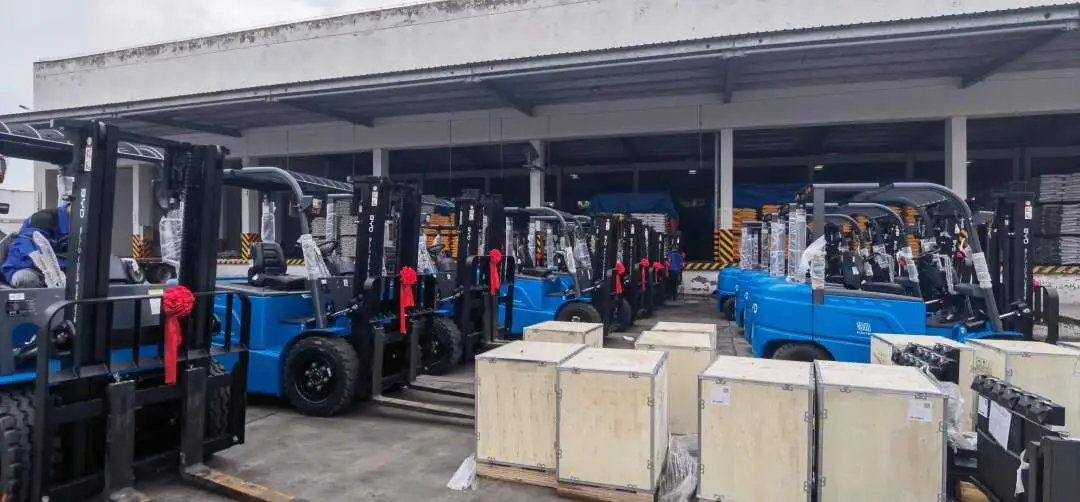
As the core hub for the transit of import and export goods, the cross-border bonded warehouse has high frequency of daily cargo handling operations and strong space constraints, which places strict requirements on the flexibility and efficiency of handling equipment. Small three-wheeled electric forklifts have become the main equipment for short-distance handling and narrow-channel operations in bonded warehouses due to their compact size and flexible steering performance. Today, we combine the real scene to explain its daily practical operation process in detail.
The inspection process before the actual operation is the foundation of safe operation. In the real shot, it can be seen that the operator first conducts an appearance inspection around the forklift: confirm that the fork has no deformation cracks and the tire pressure is normal, and then start the forklift to check the power display, the sensitivity of the braking system, and the smoothness of the steering mechanism. Although these details are simple, they can effectively avoid hidden dangers in the operation.
Entering the cargo loading and unloading process, in the real scene, the operator slowly approaches the standardized pallet to be transported, adjusts the fork spacing to align with the pallet fork hole, and then smoothly lifts the fork until the bottom of the pallet is completely off the ground (about 10-15 cm) to avoid scratching the ground or tray deformation. Keep a constant speed during driving, and sound the alarm in advance when passing through the shelf area and pedestrian passage in the bonded warehouse to ensure the safety of surrounding personnel.
Driving in the narrow channel of the bonded warehouse is a common scene, and the advantages of small three-wheeled electric forklifts are highlighted here. In the real shot, it can be seen that the operator takes advantage of its small turning radius to accurately steer in the channel that only allows single-wheel traffic, and keeps the forks stable throughout the process without shaking the goods. It should be noted that when driving in the channel, a safe distance of at least 30 cm should be maintained from the shelves on both sides to prevent scratching the shelves or goods.
The stacking operation is one of the core links of bonded warehouse handling. The real shot shows that the operator first drives the forklift to the bottom of the target cargo space, adjusts the body to align with the cargo space, slowly lifts the fork to the specified height, aligns it with the shelf beam and smoothly puts in the goods, and then slowly lowers the fork and retreats away. The whole process is coherent, and there is no sudden rise and fall operation, which effectively guarantees the safety of the goods and shelves.
In addition, the finishing process after the operation was also recorded in the real shot: the operator docked the forklift in the designated charging area, lowered the fork to the ground, turned off the power supply, and cleaned the dust and debris on the surface of the forklift to ensure that the equipment was in good standby condition and ready for the next operation.
The practical operation of small three-wheeled electric forklifts in cross-border bonded warehouses not only focuses on efficiency improvement, but also emphasizes safety norms. Through standardized operation procedures and meticulous daily maintenance, it can effectively support the turnover demand of bonded warehouses and reduce the risk of loss during handling.