简体中文
简体中文 Deutsch
 日本語
日本語 한국어
한국어 Tiếng Việt
 Русский
 ไทย
ไทย Bahasa Indonesia
 Bahasa Melayu
 Filipino
 لالعربية
 Français
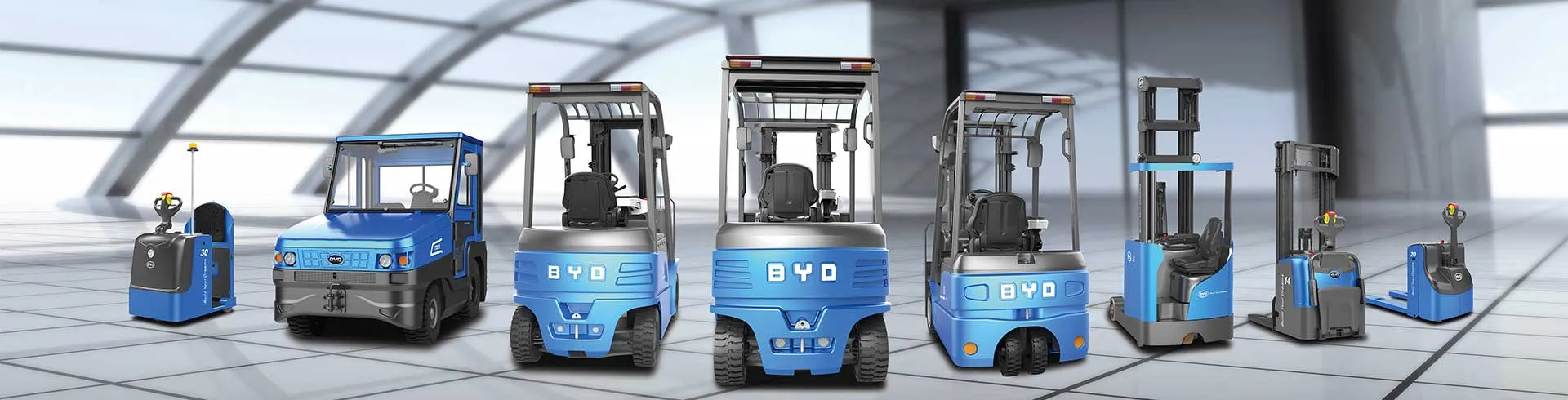
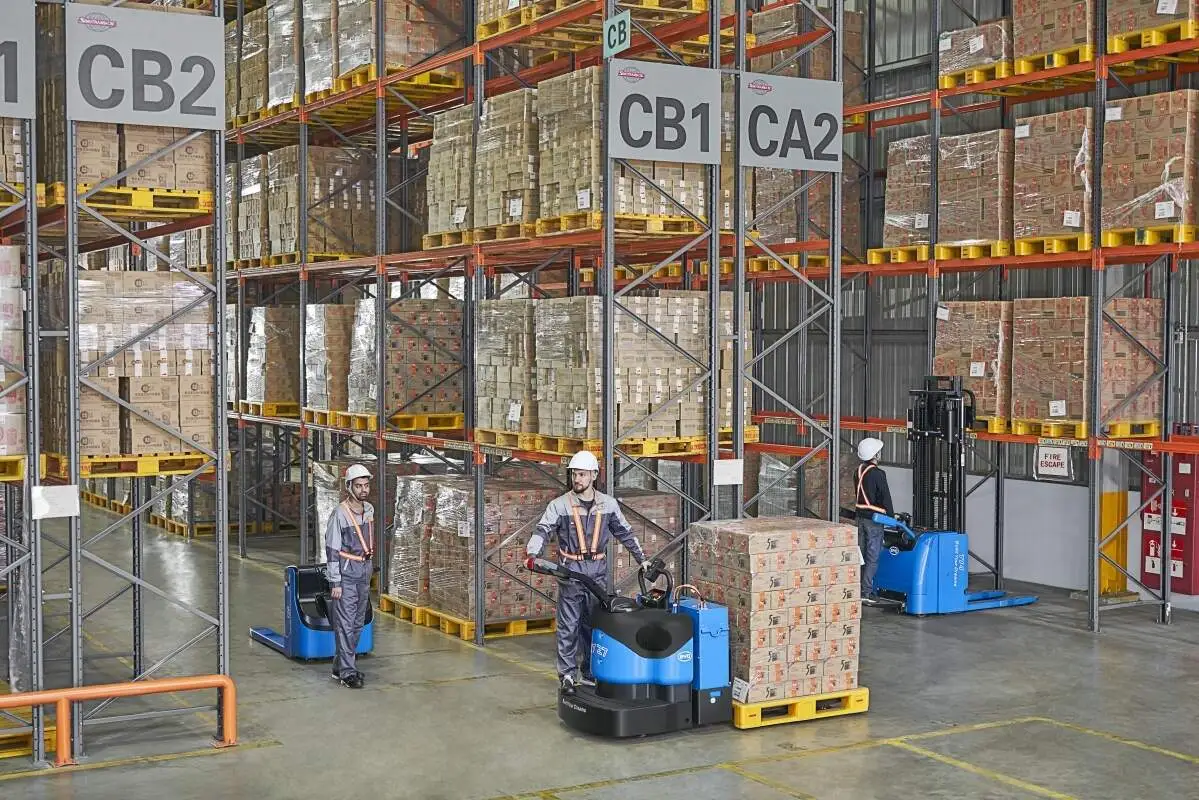
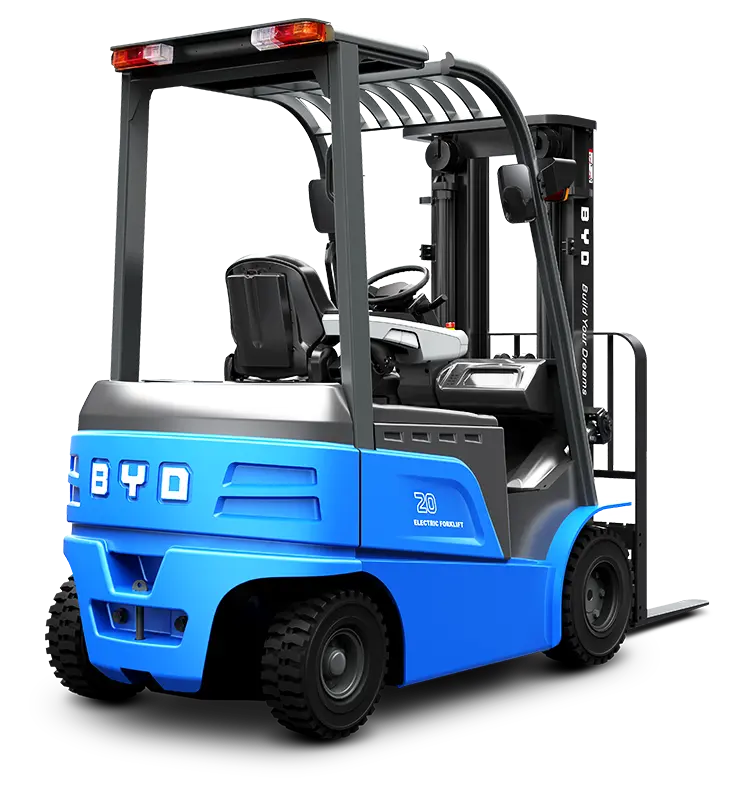
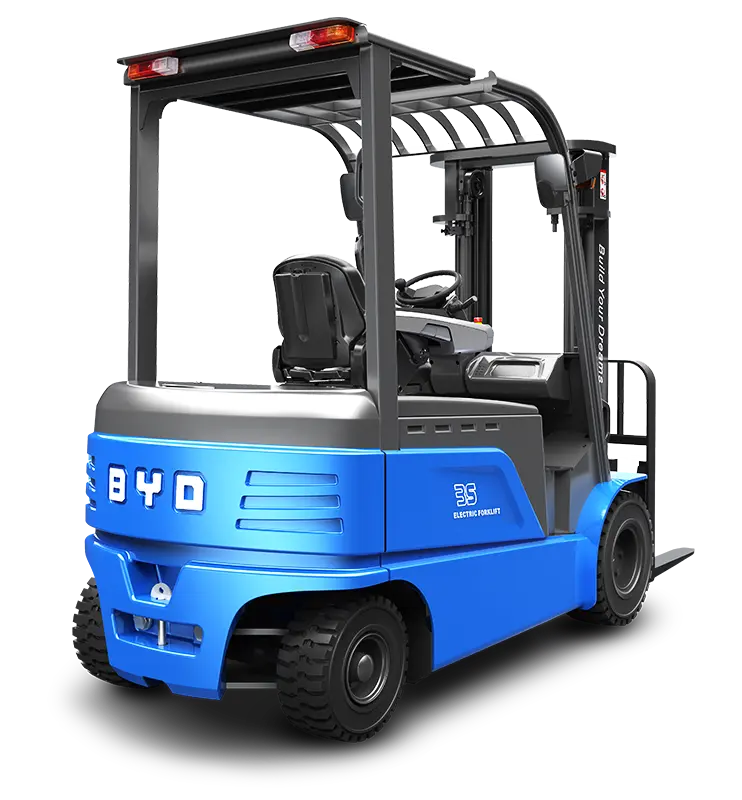
As the core transit node of goods entering and leaving the customs supervision warehouse, the operating space is generally compact, and the efficiency of goods turnover is strict. Electric forklifts are the main handling equipment, and the degree of selection and adaptation directly affects the smoothness of the operation in the warehouse. Among them, three-pivot and four-pivot electric forklifts are two types of models widely used in the supervision warehouse. There are significant differences in performance characteristics and application scenarios, and they need to be reasonably selected according to the actual operation requirements.
In terms of maneuverability and space adaptation, the steering wheel of the three-pivot electric forklift is set in the center of the front of the body, with a smaller turning radius, which can flexibly shuttle through the narrow passages and dense shelf areas in the supervision compartment, effectively reducing the occupation of working space and adapting to the layout with a small stack spacing in the warehouse. The four support points of the four-pivot electric forklift are distributed at the four corners of the body, and the turning radius is relatively large, which is more suitable for the supervision compartment area with sufficient channel width and open working area. When driving in a straight line, the stability of the body is more prominent.
In terms of carrying capacity and operation scenario adaptation, the chassis structure design of the four-pivot electric forklift is more stable, which can carry more weight of goods, and is suitable for the loading, unloading and transshipment of heavy goods in the supervision warehouse, especially the handling needs of large goods after container unpacking. The carrying capacity of the three-pivot electric forklift is relatively moderate, which is more suitable for frequent turnover of small and medium-sized goods, such as the short-distance handling of scattered packages and small pallets, and can quickly complete the adjustment of cargo space in a compact space.
From the perspective of operation efficiency and maintenance cost, the three-pivot electric forklift has the advantage of flexibility, which can reduce the duplication of operation paths and improve the turnover speed of goods in scenarios that require frequent steering and short-distance multi-frequency handling. The four-pivot electric forklift has more advantages in long-distance straight-line handling, with stable driving speed and less prone to body deviation, making it suitable for cross-regional cargo transfer. At the maintenance level, the structure of the three-pivot electric forklift is relatively simple, the number of parts is small, and the daily maintenance cost is low; the chassis and suspension system of the four-pivot electric forklift are more complex, and although it has strong durability, there are relatively many inspection and maintenance links during maintenance.
Overall, in the operation of the customs supervision warehouse, if the warehouse channel is narrow and the short-distance turnover of small and medium-sized goods is the main one, the three-point electric forklift is the better choice; if the operation area is open and involves heavy cargo handling needs, the four-point electric forklift is more adaptable. Enterprises need to choose a suitable electric forklift after comprehensive evaluation according to their own warehouse layout, cargo type and operation process to ensure the efficient operation of the supervision warehouse.