简体中文
简体中文 繁体中文
繁体中文 Deutsch
 日本語
日本語 한국어
한국어 Tiếng Việt
 Русский
 ไทย
ไทย Bahasa Indonesia
 Bahasa Melayu
 Filipino
 لالعربية
 Français
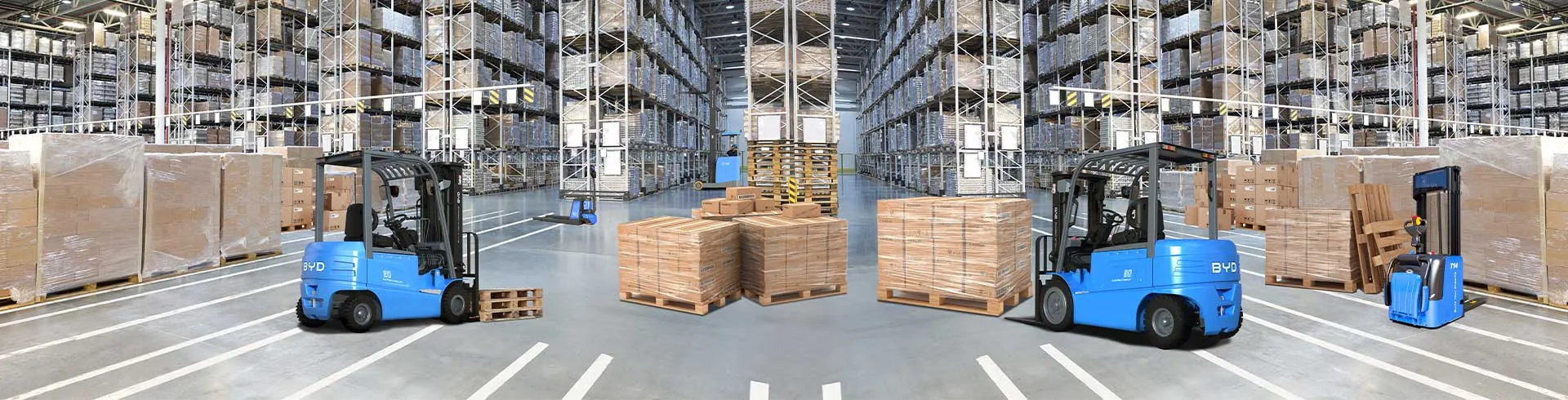
With the continuous advancement of the dual-carbon goal, the domestic logistics and manufacturing on-site handling field is accelerating its transition to green and low-carbon. In recent years, a series of environmental protection policies have been introduced in many places to strictly limit the emissions and energy consumption of on-site fuel handling equipment, injecting strong impetus into the popularization and application of electric forklifts, and the market demand is showing a steady increase.
From a policy perspective, the environmental protection supervision of on-site logistics equipment is constantly being refined. Some regions explicitly require closed or semi-closed workplaces such as industrial parks and warehousing and logistics centers to phase out high-emission fuel forklifts, and give priority to zero-emission and low-energy electric handling equipment. At the same time, some places have also introduced incentive policies such as purchase subsidies and preferential electricity prices to reduce the cost threshold for enterprises to replace electric forklifts. These policies and measures not only force enterprises to practice the concept of green development from the regulatory side, but also guide the upgrading of the market structure from the supply side, and promote electric forklifts to gradually become the mainstream equipment for on-site handling.
On-site handling scenarios require high flexibility, adaptability and environmental protection of equipment, and electric forklifts perfectly meet market demand by virtue of their own characteristics. Compared with traditional fuel forklifts, electric forklifts have no exhaust emissions during operation, which can effectively improve the air quality in closed spaces such as warehouses and workshops, and reduce the occupational health risks of front-line workers. At the same time, electric forklifts have lower noise, will not interfere with the production and operation environment, and the energy consumption cost is only about one-third of that of fuel forklifts. Long-term use can significantly save operating expenses for enterprises. In addition, with the iterative upgrade of power battery technology, the endurance and carrying capacity of electric forklifts have been continuously improved, and they have been able to cover the vast majority of on-site handling scenarios, further dispelling enterprises' concerns about model selection.
According to industry research data, the market penetration rate of domestic electric forklifts has continued to rise in recent years, and the market scale has expanded year by year. In addition to traditional application scenarios such as manufacturing and warehousing and logistics, the demand for electric forklifts in emerging fields such as e-commerce and cold chain logistics is also growing rapidly. In the future, with the continuous improvement of environmental protection policies and battery technology and intelligent technology, electric forklifts will be deeply applied in more sub-scenarios. Market demand is expected to maintain a steady growth trend, providing solid support for the green transformation in the field of on-site handling.